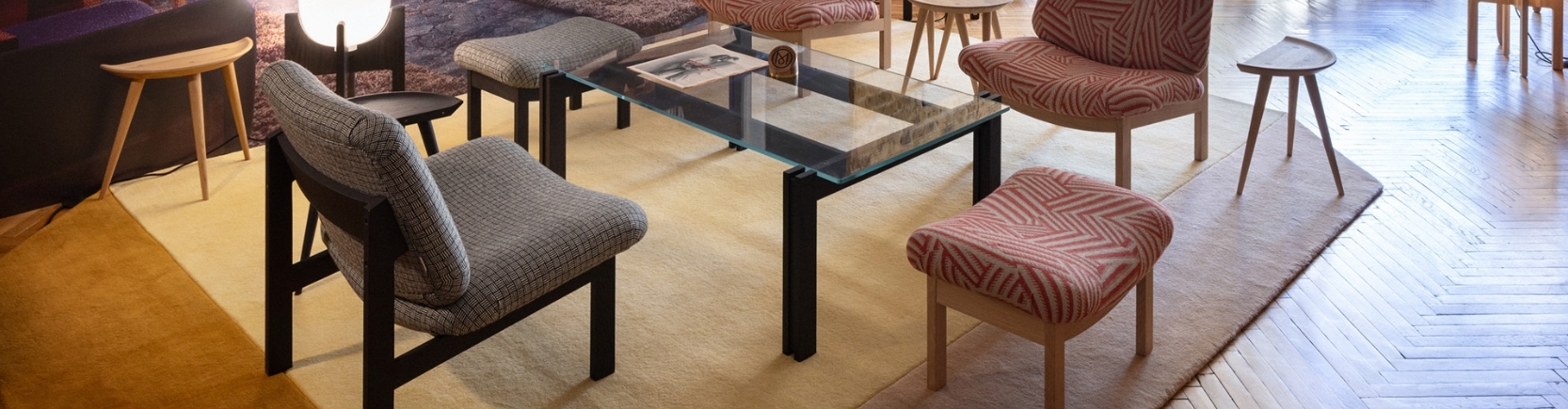
Tamart is a British furniture and design brand founded by architect Amos Goldreich to honour the legacy of his parents, the modernist polymaths Tamar de Shalit and Arthur Goldreich. Each piece in the collection is drawn from an archive of over 10,000 original plans and documents — reimagined for contemporary life and built to last.
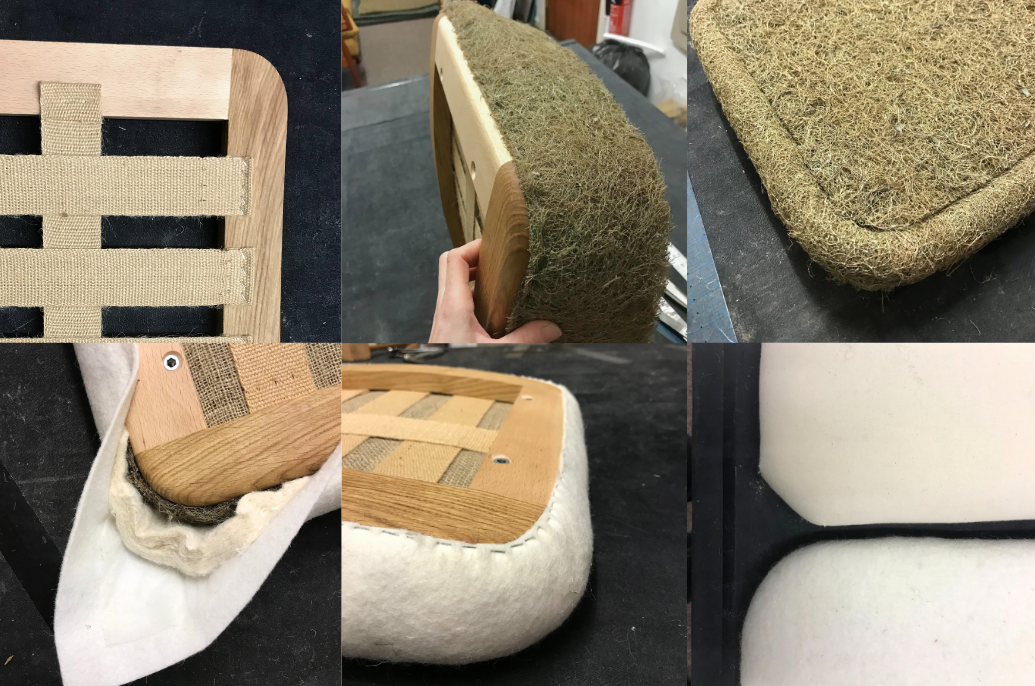
I share a deep affinity with Tamart’s approach. Mid-century design sits at a fascinating juncture: a moment when upholsterers were beginning to work with modern materials, but natural fibres and traditional construction still dominated. Coir stitched onto hessian, horsehair rolled into dug-rolls, paper used to build structure and define form – these were the techniques of that era, and they remain the most sustainable options available today. Tamart’s commitment to natural, recyclable materials made this a natural collaboration.
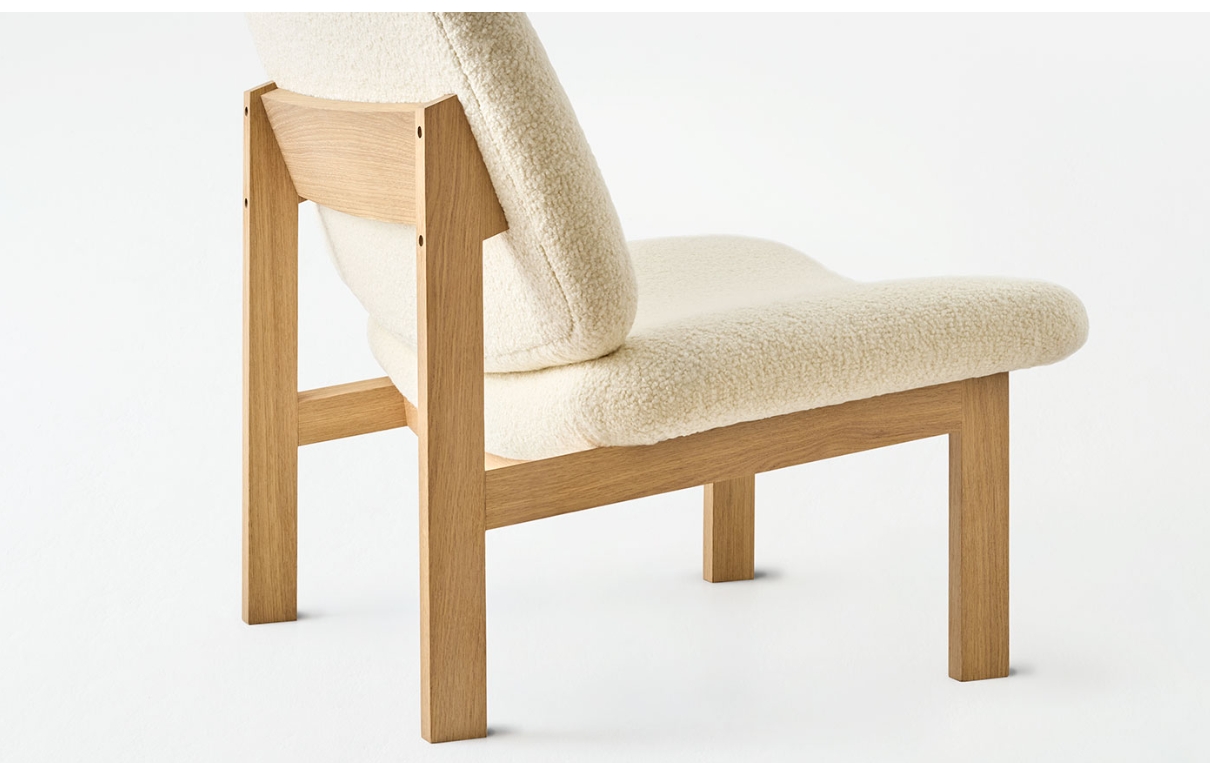
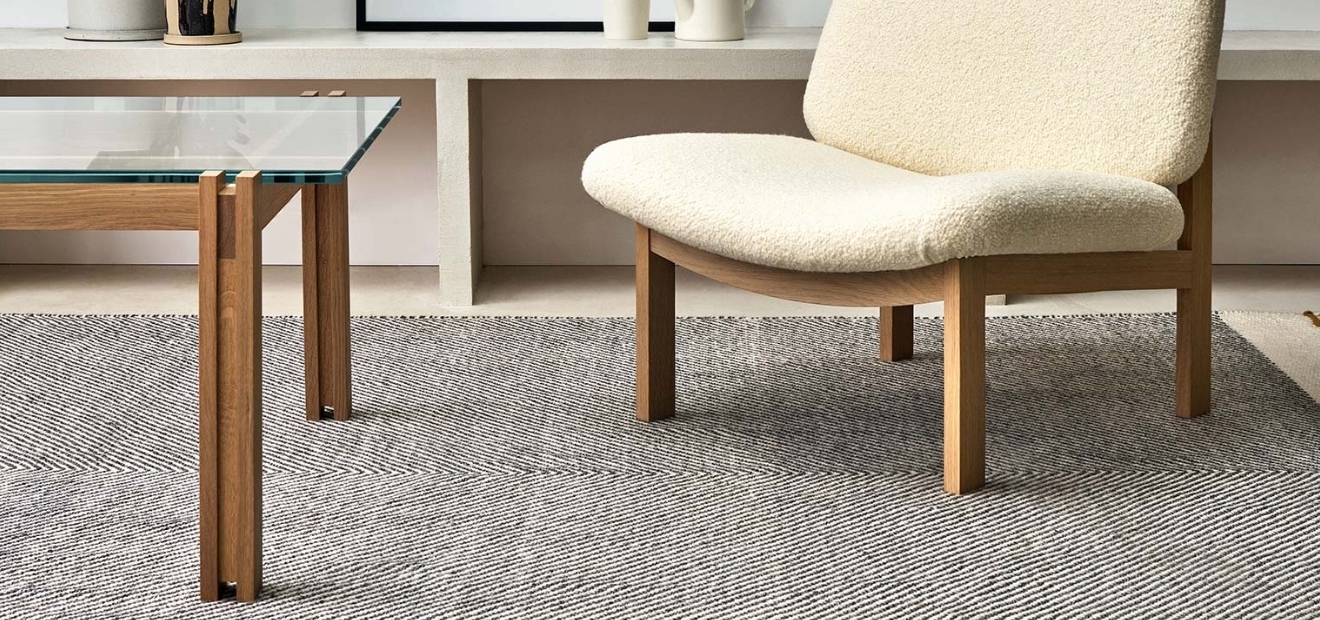
The Clore Lounger and Ottoman are upholstered using 100% natural fillings throughout. The defining feature is the bull-nosed profile that gives the Clore pieces their characteristic rounded form – achieved using an adapted paper dug-roll, a technique originally used to build structure in shallow upholstery such as stools. Natural materials are inherently soft and require considered support to hold their shape; where modern production often relies on plastic components or hard chip foam, paper offers an equally effective and far more sustainable alternative.
The same attention to finish runs through the construction details. A rebate in the outside back frame allows the fabric to sit flush and level, with no visible step at the edge — the kind of resolution that is only possible when the upholsterer and maker are working in close dialogue. At the rounded corners, extra knife pleats are placed deliberately back from the apex of the curve, drawing the fabric underneath rather than gathering it on top, so the round itself reads as clean and uninterrupted. The number and placement of pleats varies with the fabric, but the intention is always the same: a refined finish where the technique disappears into the form.
I hope to be part of Tamart’s story for as long as they will have me – whether that means developing new product lines, supporting larger production runs, or simply making one piece at a time.