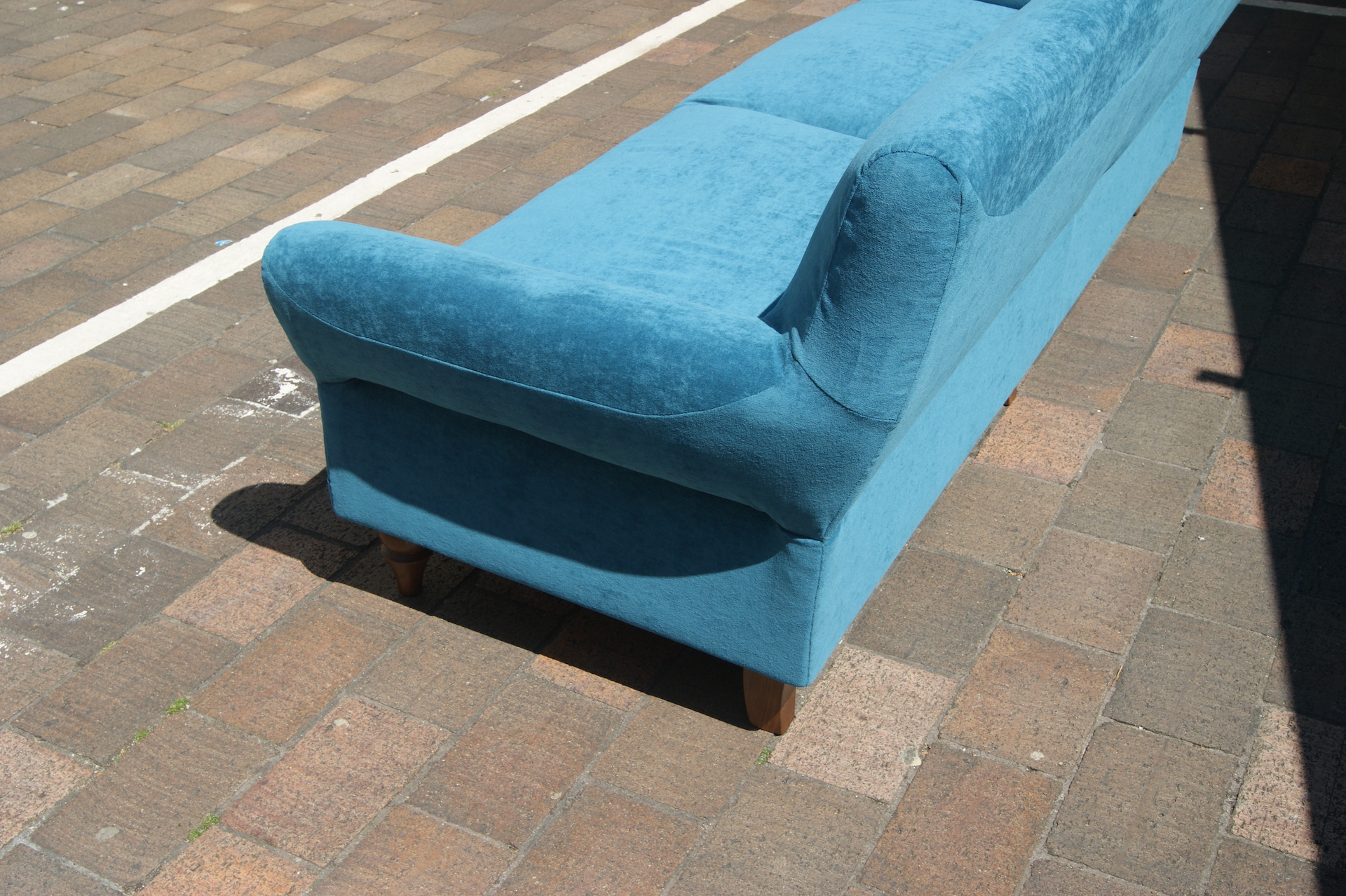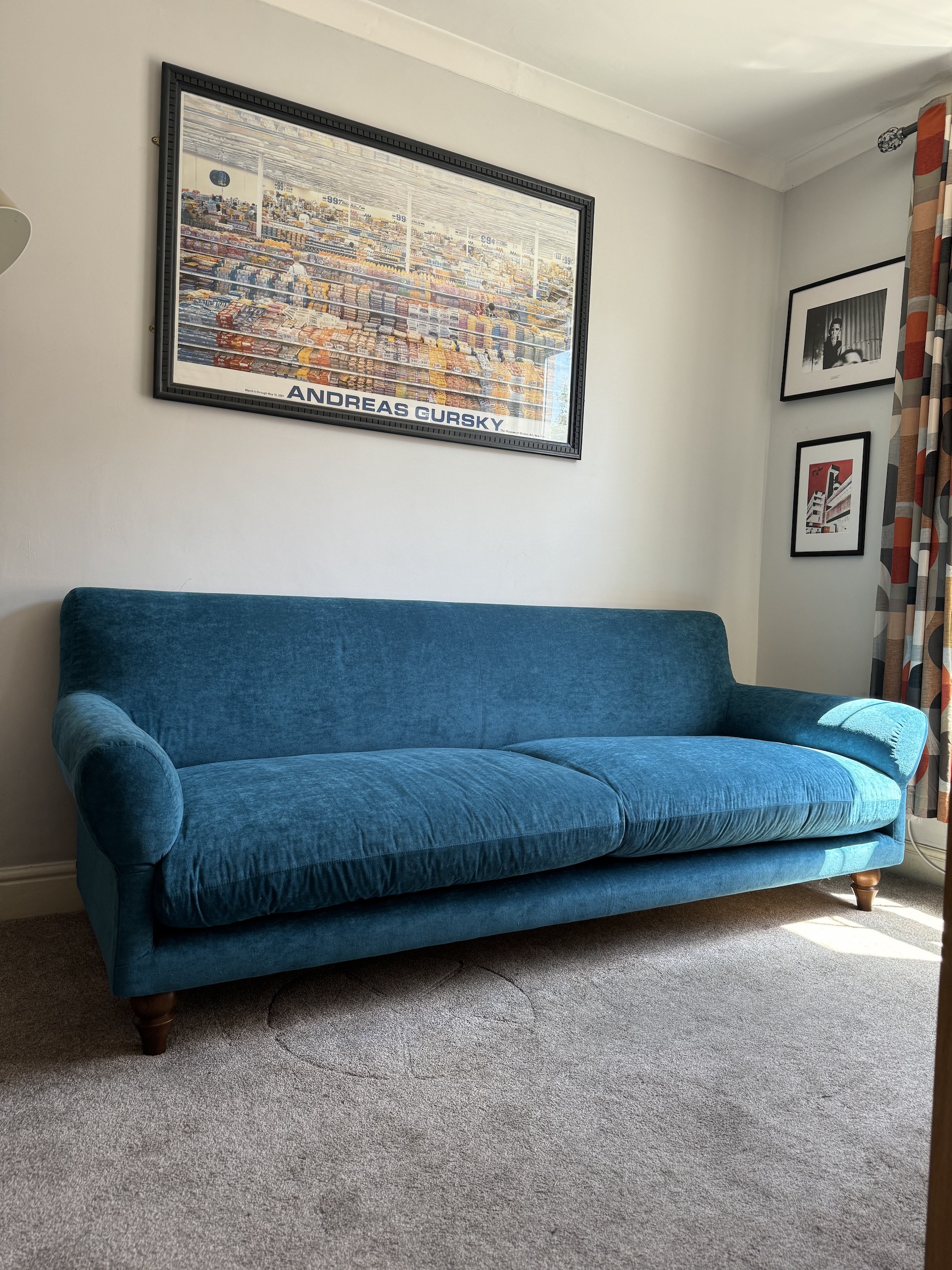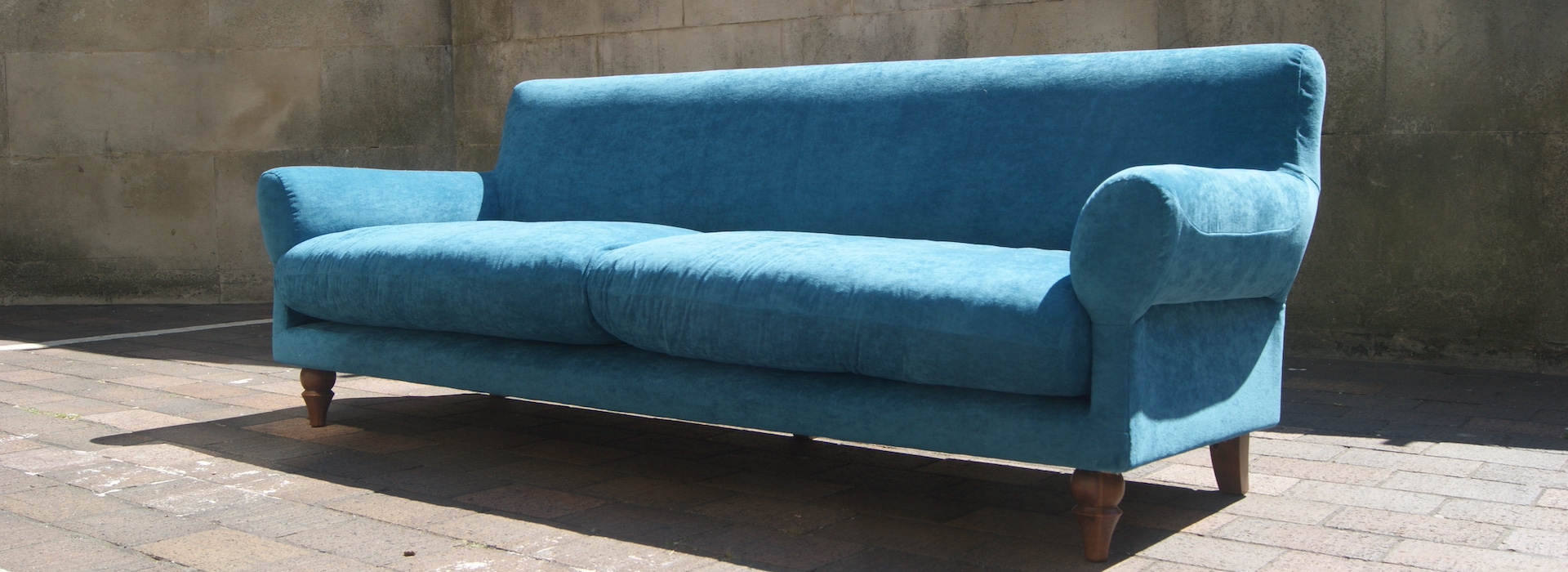
This project began when my friend Claire commissioned me to re-upholster a good second-hand sofa. We talked about finding a vintage piece on Marketplace, something from the 1980s or 90s with a solid frame, but we struggled to find one we both liked. I realised that if we couldn’t find the right one, this was the perfect opportunity to build one instead. Claire was game, and the Valerie sofa was born.
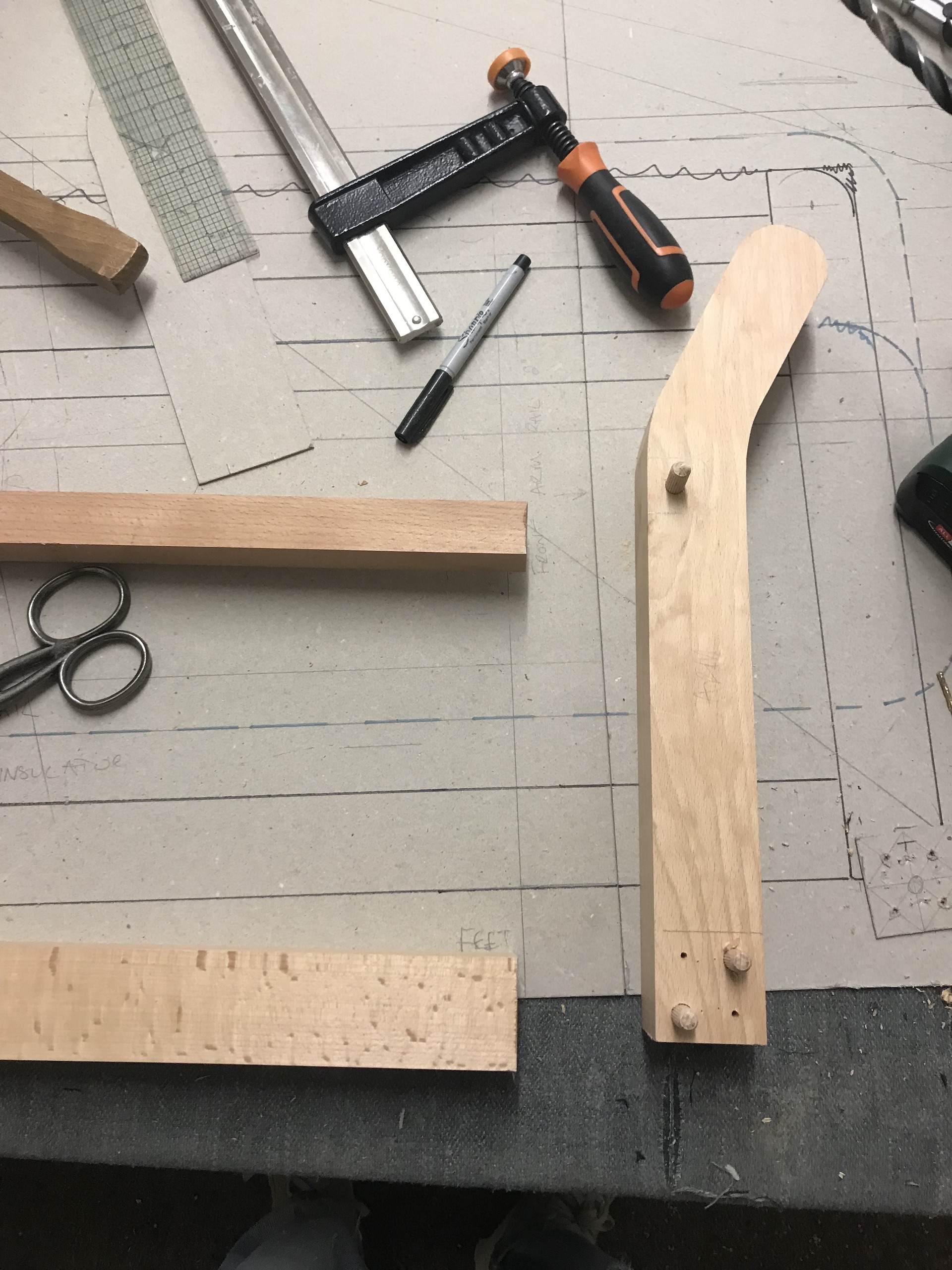
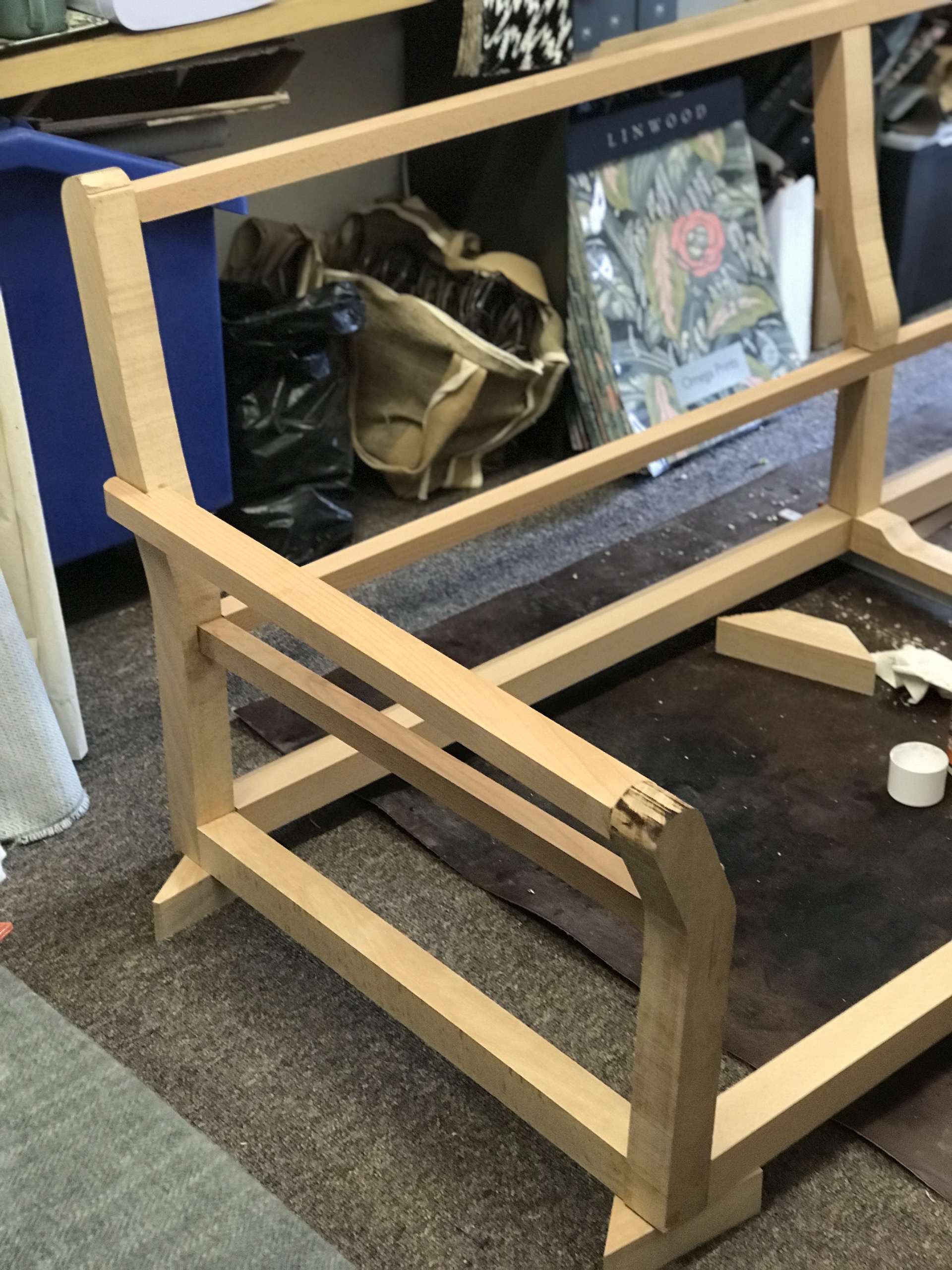
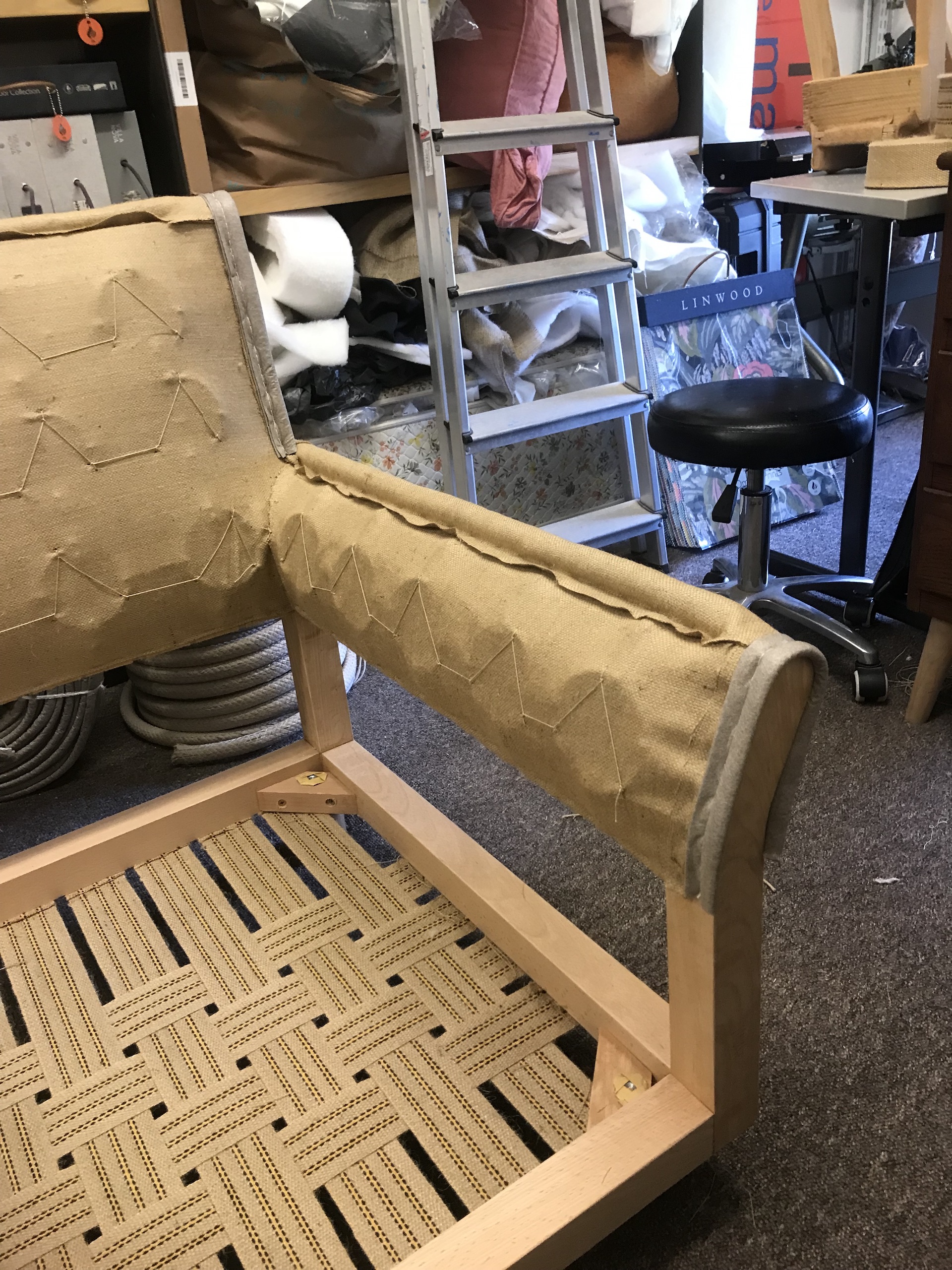
Having now dismantled and studied sofas from many different decades, I find myself particularly drawn to the frames of the Victorian era — it felt like a good place to root the design. The frame is based directly on an archetypal Victorian armchair, but with a low and square Bergère twist. Solid beech timber with dowel joints and glue construction — a simple skeletal form that has stood the test of time and is relatively easy to build in my workshop. I had a rudimentary sketch of how the sofa might look; I wanted it to be clean and modern, with a contemporary roundness to the edges.
This build gave me the opportunity to experiment, but I knew from the outset that I would not be doing multiple prototypes — there was no budget for product development. I had to make informed decisions, commit, and trust in the process. I knew I wanted to put springs everywhere, and I adapted the Victorian arm to a tilted version to explore a different angle of comfort. I may have gone a little overboard, but Claire wanted a sofa for serious lounging, so I leaned into it with pocket spring cushions on top of a Bergère-style sprung seat base.
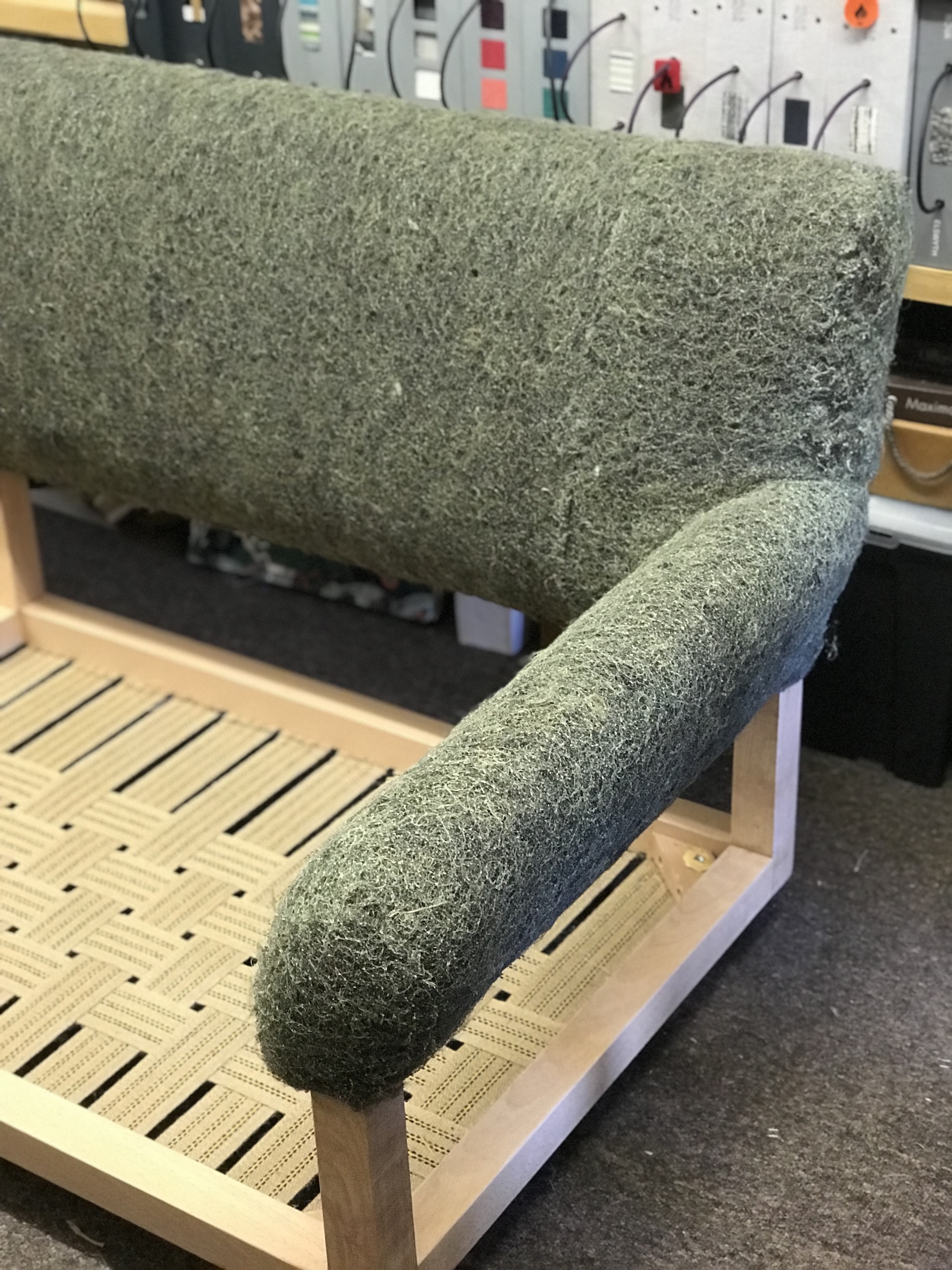
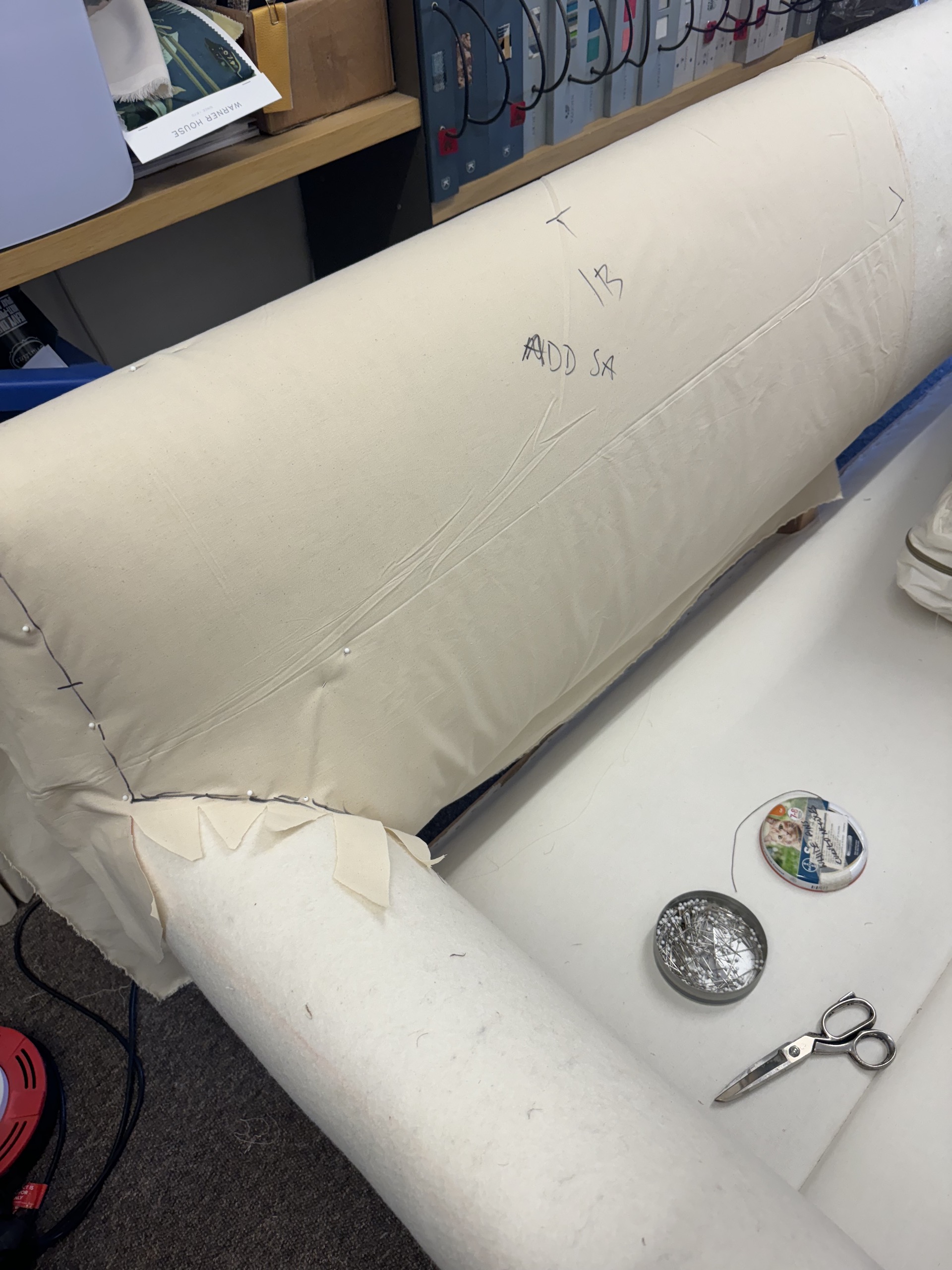
This project contains no foam — almost entirely natural. Sheet-formed rubberised hair over the springs takes the place of both traditional stuffing and modern foam, with wool felt and lining on top to create softness and define the final form. I used a small amount of Ultraflex in the cushions — a hypoallergenic product made from recycled plastic bottles, used here to pad out the pocket springs. Where a mid-century upholsterer might have encased the springs in hessian with fillings stitched and wrapped around them, I opted for feather-filled casings instead.
I trusted that my experience would lead me to a practical result, but the finer details emerged through the making process. This is the nature of much everyday upholstery work — every job is different; you get one shot at it and instinct kicks in. This creates an interesting feeling: at the end of every project, I do not see a perfectly complete piece, I see all the things I might do differently next time. Not failure at all, but a growth mindset that keeps you curious and challenged.